(Jackson Street) Books on 7th is around the corner and on the internet tubes. We strive to be your full-service new and used bookstore, emphasizing good literature, progressive politics, and, of course, books about baseball. Opened in Hoquiam October 1, 2010

Friday, January 14, 2011

Department of Book Reports: Elmore Leonard, An Appreciation


SeattleTammy and I have both been reading Cuba Libre, a 2002 novel by Elmore Leonard which served to remind me what a treasure we have in this great writer. Leonard, who is still going strong at age 85, received his early fame in the Western genre and in Cuba Libre he combines features of the western and the caper novel, the genre for which he has achieved the most recognition. In 1898 Ben Tyler, who has just been released from prison, serving time for bank robbery, joins his friend Charlie Burke in running horses and guns to Cuba. The Battleship Maine has been freshly blown up in Havana harbor, and Spain and America stand at the brink of war. Tyler gets mixed up in the politics of the Cuban insurrection and Spain still trying to keep Cuba in its imperial yoke. Tyler, who has been a cowboy, ends up shooting a rather pompous Spanish officer and is carted off to the stockade to face execution and where he meets Virgil Webster, a survivor of the Maine's demise who has been kidnapped by the Spanish. But Tyler has other plans that don't include getting shot and there is someone who owes him a big debt.

Many of Leonard's books have been filmed, and filmed well. His earlier western, Hombre, starred Paul Newman in a 1967 movie and his short story 3:10 to Yuma has been filmed twice, once just recently. Most of you are probably aware of the caper novels that have been filmed. Mr. Majestyk featured Charles Bronson, Stick had Burt Reynolds, Get Shorty, both John Travolta and Danny DeVito. Most memorably, Rum Punch was directed by Quentin Tarantino as Jackie Brown, and had a wonderful performance by Pam Grier. And it is no wonder why the films are so memorable. Leonard's sense of timing, his adept and humorous dialogue, and his vivid imagery are hard to equal. For instance, take this piece of dialogue from Get Shorty:
Ray "Bones" Barboni: Let me explain something to you. Momo is dead. Which means that everything he had now belongs to Jimmy Cap, including you. Which also means, that when I speak, I speak for Jimmy. E.g., from now on, you start showing me the proper fucking respect.
Chili Palmer: "E.g." means "for example". What I think you want to say is "I.e.".
Ray "Bones" Barboni: Bullshit! That's short for "ergo".
Chili Palmer: Ask your man.
Bodyguard: To the best of my knowledge, "e.g." means "for example".
Ray "Bones" Barboni: E.g., i.e., fuck you! The point is this: is that, When I say "jump", you say "OK", okay?

(Bones was played by Dennis Farina, and Chili, by Travolta. h/t IMDB. Travolta insisted that the screenplay using Leonard's material be used before signing onto the film, instead of a watered down version the studio wanted to use). and

Probably my favorite of Leonard's novels is Swag (aka Ryan's Rules) which featured two armed robbers, one of whom was Frank Ryan, used car salesman, who partnered with an assoicate "Stick" Stickley Jr., a car thief. They successfully rob liquor stores and bars around the Detroit area using these rules:
Always be polite on the job and say please and thank you
Never say more than necessary
Never call your partner by name-unless you use a made-up name
Never look suspicious or like a bum and dress well
Never use your own car
Never count the take in the car
Never flash money in a bar or with women
Never go back to an old bar or hangout once you have moved up
Never tell anyone your business and never tell a junkie even your name
Never associate with people known to be in criminal circles.


There is one terrific scene where the two men are having a drink at local tavern when another armed gunman comes in to rob the place. The two men offer a long critique of the robbers style and technique that is absolutely hilarious.

Elmore Leonard has his own rules for writing, that he published a few years back. Mostly the rules involve trying to make the writer invisible. Leave out the parts that a reader will probably skip anyway. Never use any other verb than "said" when moving the story along and never use an adverb to modify "said", he wrote darkly. Above all, Leonard admonishes himself to the advice that if it looks like writing to him, he re-writes it. Sage advice. If you haven't read him before, you are in for a treat.

We have several volumes available at Jackson Street Books and of course they are available at other fine Independent bookstores.As always, books ordered here will have a freebie publishers Advance Reading Copy included as a thank you to our blogosphere friends.

Saturday, January 8, 2011

Department of Book Reports: Provenance

Provenance, How a Con Man and a Forger Rewrote the History of Modern Art, by Laney Salisbury and Aly Sujo (Penguin $16.00 & $9.00 used HC) This is a fascinating look into the world of modern art and the archives that enable art galleries and museums to authenticate paintings. It really gives you a great history lesson while being a very readable art thriller.

John Myatt was a struggling single father artist who had advertised his "authentic fakes" in want ads, where he was noticed by John Drewe. Drewe is the ultimate chameleon scammer, able to spin out a story that convinced many of the art conservatories to allow him access to their records, the provenance that verifies a painting from the artist and a paintings subsequent owners. These libraries were closely guarded to prevent records from being taken, but there were no protections from records being inserted into them to prove the origins of the some 200 paintings Myatt eventually produced for Drewe.

Drewe became a skilled forger in his own right, faking sales receipts and catalogs. While some archivists noticed some anomalies, they were unable to bring a definitive case to the police. It was Drewe's spurned ex-wife who brought the police evidence that could bring the scam to light.

Ultimately, Drewe served 4 years of a 6 year sentence and Myatt less than a year. Drewe maintains his innocence to this day, in ever-increasing elaborate tales of conspiracies. Myatt was sentenced to far less time for his mostly un-witting contributions. Myatt vowed to never paint again, but resumed his Authentic Fakes art business at the prompting of one of the Scotland Yard detectives, producing paintings that are clearly marked as "fakes" and even had a BBC series explaining art forgeries.

Illustrations would have really helped this book, but Laney Salisbury has several of the Myatt forgeries at her website.

Provenance is available at Jackson Street Books and other fine Independent bookstores.As always, books ordered here will have a freebie publishers Advance Reading Copy included as a thank you to our blogosphere friends.

Saturday, January 1, 2011

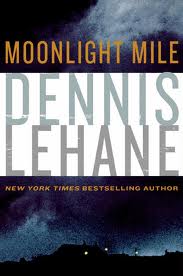
Department of Book Reports: Moonlight Mile


Moonlight Mile, by Dennis Lehane (Morrow, $26.99) The last installment of Lehane's Patrick & Angie series was Prayers For Rain, in 1999. Moonlight Mile finds them married in their 40s with a young daughter. The current economic situation has not been kind to them, Patrick is trying to contract with a security company to keep the bills paid. When the aunt of a girl he rescued when she was 4 comes to ask him to help find the once-again missing 16 year old, he doesn't want to take on an unpaid job. And while returning Amanda to her neglectful abusive mother was the correct thing to do 12 years ago, it has never felt like the right thing to do.

Finding Amanda this time will involve Russian mafia, meth dealers, black market baby adoptions and a stolen icon, The Belarus Cross.

This sixth installment in the series is probably the last, and is a fine epilogue to the books. Lehane has never been one to shy away from examining social justice issues and he uses it well here. I do recommend you read Gone Baby Gone before this, but even if you haven't you'll get enough background to enjoy this great novel.


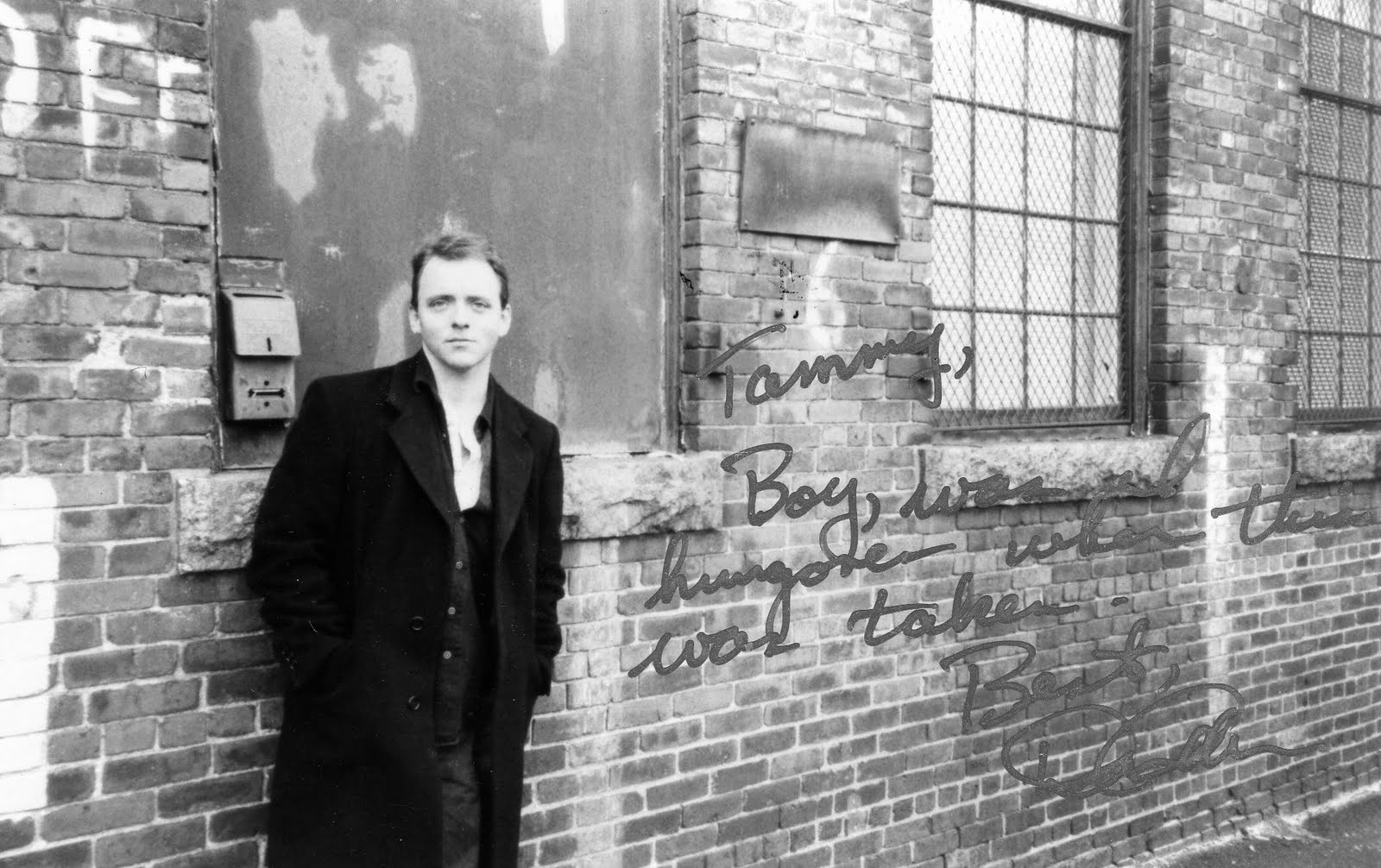
We want to wish all our blogosphere friends the very Happiest New Year! I thought this picture might be appropriate to end this book report with:
Moonlight Mile is available at Jackson Street Books and other fine Independent bookstores.As always, books ordered here will have a freebie publishers Advance Reading Copy included as a thank you to our blogosphere friends.
Friday, December 24, 2010

Department of Book Reports: Happy Holidays!

We've posted this here the past two years, and, of course, it holds up this year...and will again next year. Want and ignorance remain with us. There are so many people out of work, or just trying to make ends meet that their holiday isn't gonna be all that great. An Austerity Christmas for many, if any at all. And ignorance? Just look at the news.

The following is, of course, from the climax of Stave Three, as Dickens called it, when Scrooge is abandoned by the Spirit of Christmas Present. Among my English major friends, Charles Dickens is regarded as a rank sentimentalist, and, worse, a writer who achieved popularity with the reading public of his time. At the same time, I argue that he was also one of the most acute social critics of the 19th Century, and a critic that helped transform that world for the better.

The scene below contains one of the most powerful images in English Literature. And it still holds true today.

Happy Holidays from SeattleDan and Seattle Tammy!From the foldings of its robe, it brought two children; wretched, abject, frightful, hideous, miserable. They knelt down at its feet, and clung upon the outside of its garment. "Oh, Man, look here! Look, look, down here!" exclaimed the Ghost. They were a boy and a girl. Yellow, meagre, ragged, scowling, wolfish; but prostrate, too, in their humility. Where graceful youth should have filled their features out, and touched them with its freshest tints, a stale and shrivelled hand, like that of age, had pinched, and twisted them, and pulled them into shreds. Where angels might have sat enthroned, devils lurked, and glared out menacing. No change, no degradation, no perversion of humanity, in any grade, through all the mysteries of wonderful creation, has monsters half so horrible and dread. Scrooge started back, appalled. Having them shown to him in this way, he tried to say they were fine children, but the words choked themselves, rather than be parties to a lie of such enormous magnitude. "Spirit, are they yours?" Scrooge could say no more. "They are Man's," said the Spirit, looking down upon them. "And they cling to me, appealing from their fathers. This boy is Ignorance. This girl is Want. Beware them both, and all of their degree, but most of all beware this boy, for on his brow I see that written which is Doom, unless the writing be erased. Deny it!" cried the Spirit, stretching out its hand towards the city. "Slander those who tell it ye. Admit it for your factious purposes, and make it worse. And abide the end."
"Have they no refuge or resource?" cried Scrooge.
"Are there no prisons?" said the Spirit, turning on him for the last time with his own words. "Are there no workhouses?"
The bell struck twelve.

Les Standiford has a timely book out just now, The Man Who Invented Christmas: How Charles Dickens's A Christmas Carol Rescued His Career and Revived Our Holiday Spirits (Crown Publishing, $19.95) NPR has an excellent excerpt in their Indie Bookseller's Round-up.

As always, lovely books can be found at your favorite independent bookstore. Book orders can be placed 24 hours a day at Jackson Street Books.

Saturday, December 18, 2010

Department of Book Reports: End of the Year, Finally


It's been a crazy year for the ol' Book Reporters and with the Holiday rush upon us, we thought we'd point out a few of the outstanding books we've read.
SeattleDan loved the baseball book, The Bullpen Gospels, relief pitcher Dirk Hayhurst's account of his struggles in both pitching professionally in the minor leagues and dealing with a highly dysfunctional family. Told with great humor and perception, Hayhurst's book is one of the best baseball books written. SD also treasured Guernica, the story of a Basque family before, during and after the Spanish Civil War. The work is a fine saga, mixed with the pride, comedy and tragedy of a strong people amidst some of the most gruesome aspects of the past century. Jeffrey Kaye's Moving Millions: How Capitalism Fuels Global Immigration is a fine study of how coyote capitalism spurs worldwide immigration. The book is rich in both anecdote and interviews; for those wanting an overview of immigration today, this is the book. Finally Adrian Goldsworthy's How Rome Fell analyzes deeply both the root causes of Rome's collapse as well as the notion of Empire.

SeattleTammy's favorites included Boneshaker, Cherie Priest's delightful Steampunk novel set in turn of the century Seattle, which leaves no Swash un-Buckled. Boneshaker has won just about every major award out there since you read about it here. Will Grayson, Will Grayson is a touching gay YA novel, which would appeal to straight or gay kids, especially those in theater. Our Second Life friend, Lelani Carver introduced us to Keith Thomson's Once A Spy and helped arrange a Second Life Virtual Author Appearance in March. We enjoyed several author readings in SL, including Peter May's Virtually Dead which actually takes place in SL!

SeattleTammy was recently interviewed by Erin Underwood about the Virtual Bookstore at her blog Underwords. Sunday, Dec 19th (6 to 9 pm PST), we'll have a Holiday Open House at Lacamas Reading Hall. Come on over to see which of our favorite authors drop by.

We wish you all the very best of the season and into the upcoming New Year.

Friday, December 10, 2010

Department of Book Reports: Odds & Ends

One of the pleasures of re-opening a brick and mortar store is that customers bring us some of their books to trade-in. The customers, of course, get some credit and can add to their own libraries inexpensively, and we, the booksellers, get to replenish our inventory and get reminded of some good books and discover books that have flown under our radar since our storefront hiatus.

Among the books we have recently received includes David James Duncan's fine family saga, The Brothers K. Duncan, the author of the acclaimed The River Why, tells the story of these brothers, brought up on a farm, by a father who had hoped to have a baseball career, but was thwarted in his youth. Set during the fifties and sixties, the book has many fine moments and when I read it a few years ago, I couldn't put it down.

Stephanie Kallos is the author of the perennial book club favorite, Broken for You, and her new novel, published in 2009, Sing Them Home, absolutely slipped by us. Another family saga, set in Nebraska, she tell the story of the Jones siblings whose young lives are irrevocably changed by the strange disappearance of their mother during a tornado in 1978. They are brought back together by the sudden passing of their distant father decades later, leading to self-discovery and insight.

SeattleTammy is enjoying Lincoln Child's Deep Storm, which was published a couple of years ago. Child is probably best known for his collaborations with Douglas Preston, and are well-written thrillers. Deep Storm is about a scientist investigating the mental illnesses suffered by a crew that seems to have discovered links to the ancient world of Atlantis.

Douglas Brinkley's The Great Deluge: Hurricane Katrina, New Orleans and the Mississippi Gulf Coast, is the highly regarded inquiry into what happened on August 29th, 2005. At great length, Brinkley delves into the devastation and the human cost of the tragedy. He conducted many, many interviews with the survivors, providing a history written at the human level.

Finally, we have seen a copy of Arundhati Roy's The God of Small Things come into the store. Originally published in 1997 and winner of the Booker Prize. the book is yet another family portrait, focusing on the lives of two fraternal twins, raised in Kerala, India. The events of the novel take place between 1969 and 1993, and describe and limn the lives of these two as well as the lives they touch. Roy, herself, has become a great human rights activist. To date this is her only novel.

So, what are you reading? And what do you hope Santa will bring you to read this year?
And DemoCommie, we are still awaiting the advance copy of your cookbook.

If you're in the neighborhood today, stop by for a gingersnap.


These books are available at Jackson Street Books and other fine Independent bookstores.As always, books ordered here will have a freebie publishers Advance Reading Copy included as a thank you to our blogosphere friends.
Saturday, December 4, 2010

Department of Book Reports: Four Color Fear

I'm delighted to have Four Color Fear, by John Benson (Fantagraphics, $29.95) on our new release table now. This is a delightful collection of Entertaining Comics most gruesome and twisted tales. Fantagraphics has a flip-thru preview that gives a feeling for the content on youtube. 42 complete comic books are reprinted in all their lurid colors.

Those wonderful, terrible horror comics of the 1950s are still so embedded in our popular culture that it’s hard to realize that those who actually remember reading them when they came out are now in their late sixties or early seventies. That these old comics still seem contemporary is largely due to the Entertaining Comics (EC) titles Tales from the Crypt, Vault of Horror and Haunt of Fear, which have been made into several feature films and a popular HBO series, and have been in print continuously for over forty years in a variety of formats (they’ve even been adapted in text form for younger readers). Horror masters Stephen King and George Romero have readily acknowledged an indebtedness to EC comics, which alone would be enough to prove their relevance to current entertainment tastes, but many others have also been influenced, directly or indirectly.

Undeniably, EC created a whole new style of horror. Rather than relying on traditional supernatural elements, EC typically focused on events that could actually happen, such as someone being boiled in oil or hacked to pieces. Realistic situations would build to “trick” endings that might be better described as ingenious rather than truly imaginative. When there was a fantastic element, it was often in the form of traditional vampires and werewolves entering a modern real-world setting. A vital EC element was its three “GhouLunatics,” the hosts whose sardonic and often humorous patter was integral to the horrific proceedings, but EC’s most important component was publisher Bill Gaines, who co-plotted most of the stories, loved the material he published, and encouraged his artists to do their best. Gaines brought a rare consistency to EC, though that consistency came at the expense of an increasingly narrow range as the series progressed.
.......
Rather than being grouped by artist, publisher, subject matter or chronologically, these stories have been arranged “aesthetically” to provide maximum variety and change of pace when the book is read straight through. So, relax, curl up in a cozy chair, set aside a block of time, and imagine yourself as a kid in the 1950s, reading these stories slowly to savor every chilling moment.
From the introduction by the author.

Four Color Fear is available at Jackson Street Books and other fine Independent bookstores.As always, books ordered here will have a freebie publishers Advance Reading Copy included as a thank you to our blogosphere friends.